One Athlete's Journey to Redefine ACL Recovery
Follow Nolan Ambrosino's week-by-week documentation of achieving one of the most exemplary ACL recoveries recorded—and access the world's most comprehensive, evidence-based ACL rehabilitation resource.
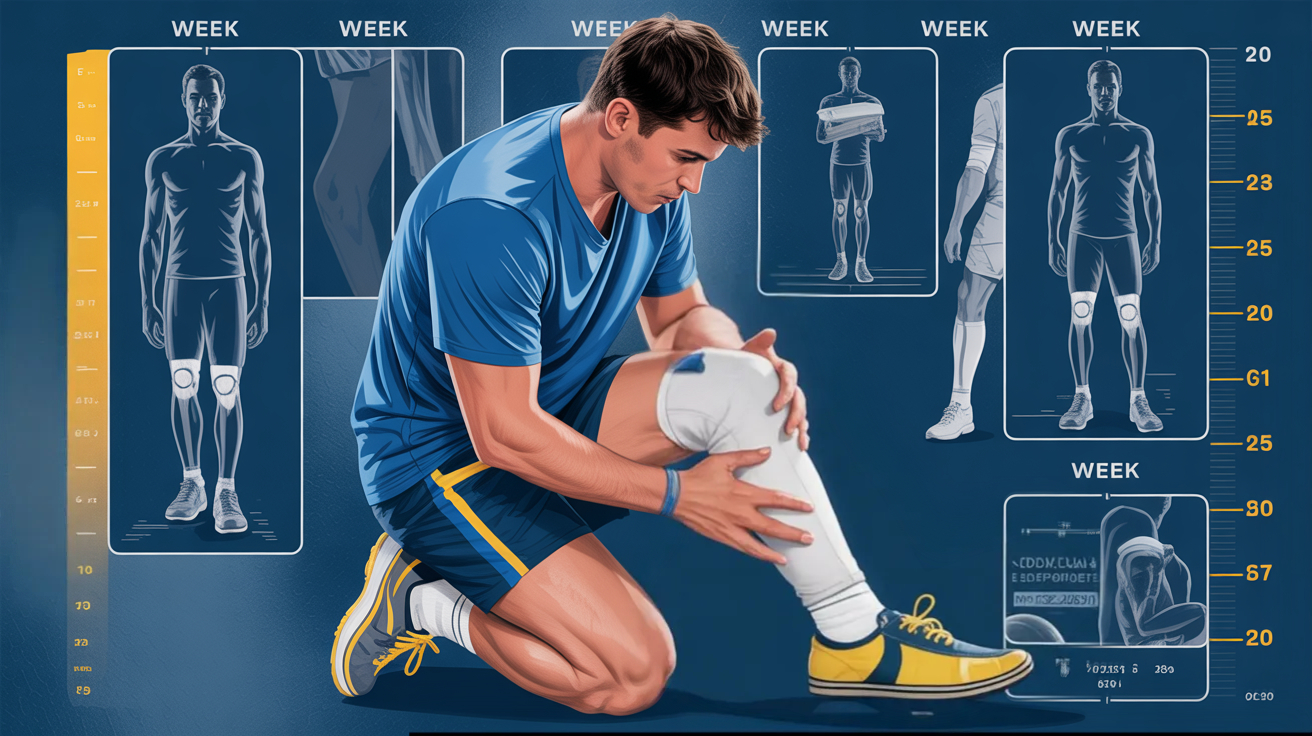
Follow Nolan Ambrosino's week-by-week documentation of achieving one of the most exemplary ACL recoveries recorded—and access the world's most comprehensive, evidence-based ACL rehabilitation resource.
The Anterior Cruciate Ligament (ACL) is one of the four major ligaments in your knee. Here's everything you need to know about the ACL, injuries, and recovery.
ACL stands for Anterior Cruciate Ligament. It is a strong band of tissue (ligament) that connects your thigh bone (femur) to your shin bone (tibia). The word "anterior" means it's located at the front of the knee, and "cruciate" means it crosses (from Latin "crux" meaning cross)—because the ACL crosses over the posterior cruciate ligament (PCL) inside your knee joint. Learn more about the ACL →
The ACL is located deep inside the center of your knee joint. It runs diagonally through the middle of the knee, connecting the back of the femur (thigh bone) to the front of the tibia (shin bone). The ACL sits behind your kneecap (patella) and works together with three other major ligaments—the PCL, MCL, and LCL—to keep your knee stable.
The ACL prevents your shin bone from sliding forward relative to your thigh bone and controls rotational movements of the knee. It's essential for:
Without a functioning ACL, the knee can feel unstable and "give way" during physical activity.
ACL tears most commonly occur during sports that involve sudden stops, jumping, or direction changes. Common mechanisms include:
You may hear a "pop," feel immediate pain, and experience rapid swelling. The knee often feels unstable or gives way.
No, a completely torn ACL cannot heal or repair itself. Unlike some other tissues in the body, the ACL has a poor blood supply and is bathed in synovial fluid, which prevents proper healing. Here's what you need to know:
Important: While the ligament won't heal itself, not everyone needs surgery. Some people can function without an ACL through strengthening and activity modification. Read the complete guide on ACL healing →
ACL reconstruction surgery replaces the torn ligament with a tissue graft. The procedure is typically arthroscopic (minimally invasive):
Surgery typically takes 60-90 minutes. Learn more about surgery options and graft types →
Full ACL recovery typically takes 9-12 months, though the timeline varies based on graft type, individual healing, and activity goals:
Key insight: Returning too early significantly increases re-injury risk. Evidence shows waiting at least 9 months reduces re-tear rates. View the complete recovery timeline →
Want to learn more? Explore our comprehensive resources:
42% of ACL surgery patients develop depression. 76% cite fear as preventing their return to sport. Yet virtually no comprehensive resource exists to guide patients through the complete 9-12 month recovery journey—addressing both physical AND mental health challenges.
This changes today. ACL Heal is the first platform to integrate evidence-based physical protocols with validated mental health support, week-by-week guidance, and real patient experiences—all in one trusted destination.
Week by week, Nolan is documenting every aspect of his ACL recovery—the physical milestones, the mental challenges, the setbacks, the breakthroughs, and the science-backed strategies that are making this one of the most remarkable recoveries on record.
The injury, the diagnosis, choosing the surgeon, selecting graft type, and mental preparation.
The procedure, immediate post-op experience, and the first 48 hours.
Pain management, range of motion goals, the depression peak, and early victories.
Progressive strength training, neuromuscular control, and managing impatience.
Running, jumping, plyometrics, and confronting the fear of reinjury.
Cutting, pivoting, agility work, and psychological readiness assessment.
Comprehensive testing, return-to-sport clearance, and the first game back.
Follow along week by week as Nolan shares his complete recovery journey—the science, the struggles, and the strategies.
Weekly updates only. Unsubscribe anytime. Privacy respected.
The first ACL resource to integrate validated psychological screening tools, evidence-based mental health interventions, and explicit support for the emotional journey—not as an afterthought, but as essential.
Detailed roadmaps for every single week of recovery—physical protocols, mental health checkpoints, expected challenges, and specific strategies matched to exactly where you are.
Every protocol, every recommendation, every claim is backed by peer-reviewed research from 2023-2025. Citations, evidence quality ratings, and transparent acknowledgment of what we don't know.
Interactive protocol comparisons showing conservative vs. accelerated vs. criterion-based approaches—presented as collaborative dialogue, not confusing contradictions.
Nolan's complete daily documentation—the setbacks, the fear, the victories—verified by medical professionals and presented alongside clinical context.
Every resource, every tool, every piece of guidance—free and accessible to anyone, anywhere. No subscriptions, no paywalls, no barriers to access.
Start with the content most relevant to your current stage of recovery.
Understanding your injury, surgical vs. non-surgical options, choosing a surgeon, and pre-surgery preparation.
→Managing pain, wound care, basic mobility, what's normal vs. concerning, and surviving the hardest days.
→Range of motion restoration, weaning off crutches, managing depression, and establishing routine.
→Building strength, balance training, maintaining motivation, and laying the foundation for all future progress.
→Running progression, plyometrics, managing fear of reinjury, and sport-specific movement preparation.
→Advanced agility, cutting and pivoting, psychological readiness, and return-to-sport preparation.
→Comprehensive testing, clearance criteria, graduated return protocols, and managing the first competition back.
→Screening tools, coping strategies, managing fear and depression, and psychological resources at every stage.
→This website provides educational information only and is not a substitute for professional medical advice, diagnosis, or treatment. Always seek the advice of your physician or other qualified health provider with any questions you may have regarding a medical condition or treatment.
Use of this website does not create a healthcare provider-patient relationship. If you are experiencing a mental health crisis, call or text 988 (Suicide & Crisis Lifeline) or call 911 immediately. This website cannot handle emergencies.
Recovery timelines and protocols vary significantly based on individual factors. Information presented here represents research evidence and expert opinion but must be tailored to your specific situation by qualified professionals who know your case.